🇮🇹🇩🇪

MikiLab's recipes

Browse the recipes and make them at home: doses recalculated for the home oven, explained step by step.

MikiLab doesn't want to teach the craft to anyone who has practised it all their life. Hands, flour, the home oven and time always change something.

Sitor's Workshop

176 recipes
Other ways through the recipes

Recipes are of two kinds: those checked or tested by Michele and the drafts written by Sitor, Michele's AI avatar: an artificial intelligence based on Anthropic models. Each recipe clearly states which kind it is.

Free for personal use. Recipes and texts © MikiLab: reproducing or selling them is forbidden, links are welcome. Official prints and shares carry the MikiLab logo.

© MikiLab — Sitor's Manual · Made with Michele's hands

Other languages: use your browser's translator.

Radio

Pane di Cristallo ad Alta Idratazione col Metodo MikiLab

Enter doses, hydration and times. Hydration is computed automatically.

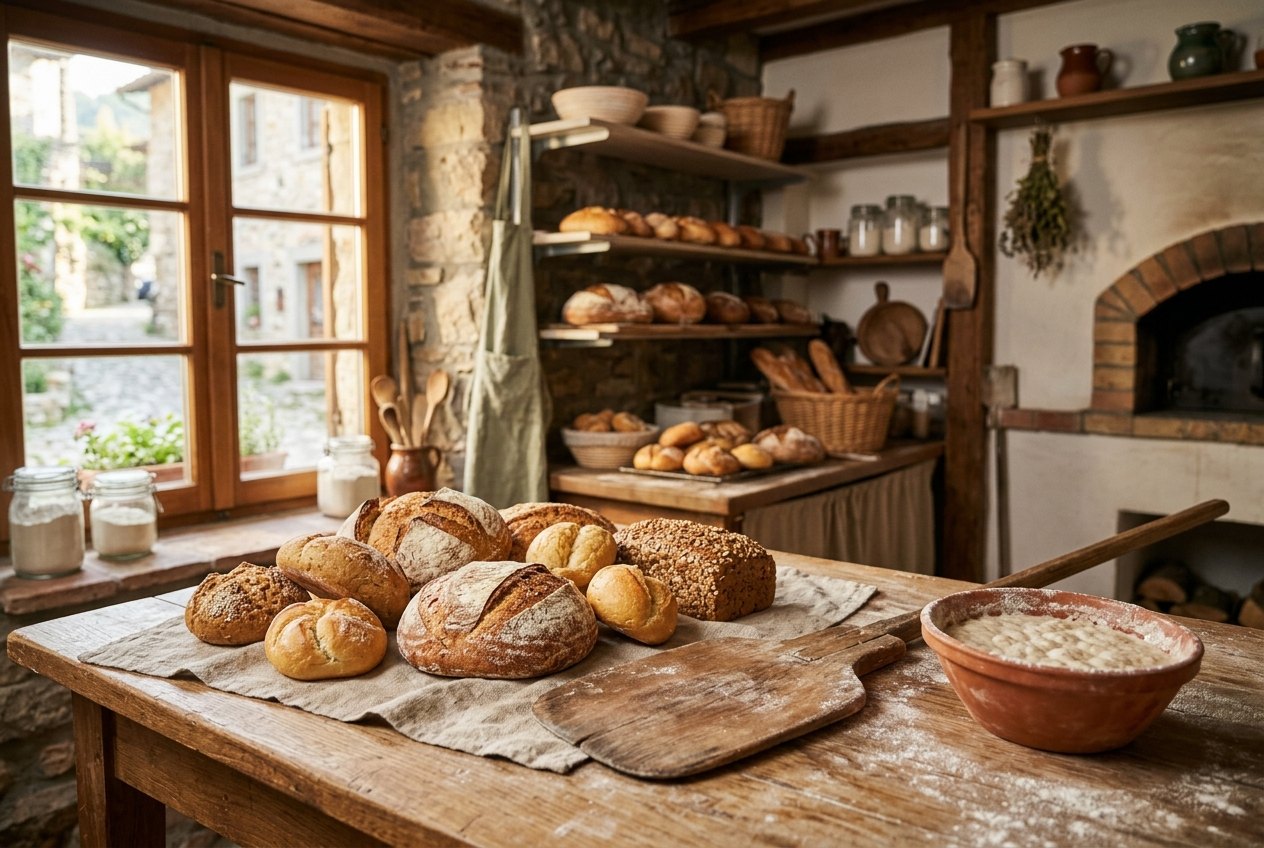
High-Hydration Crystal Bread with the MikiLab MethodIllustrative image
MikiLab
MikiLab
High-Hydration Crystal Bread with the MikiLab Method · 13/10/2026

High-Hydration Crystal Bread with the MikiLab Method

Crystal Bread (High-Hydration Catalan Bread)

Recipe no. 30 · mikilab.de/30

Strong flour W300-320 (or blended with Manitoba)

Tested by Michele

Michele's touch: soaked breadcrumbs

In all my savoury recipes I add a little soaked breadcrumb, the «Brösel» (German bakers call it an old-bread soaker). It makes the crumb softer, brings crust flavour and keeps the bread fresh longer. Optional: the recipe works without it, but I always do it.

Dry breadcrumbs

50 g

Water

150 g

for this recipe, with 1000 g of flour

  1. The day before: stir the breadcrumbs and water into a soft paste. Cover and keep it in the fridge overnight.
  2. The next day: add all the paste to the final dough (not to the preferment), with the other ingredients. The recipe's water stays the same.

Use plain breadcrumbs, with no salt or seasoning. Best of all is your own bread from yesterday, dried and grated.

MikiLab
MikiLab
Sitor's Manual

High-Hydration Crystal Bread with the MikiLab Method

Farina forte W300-320 (o taglio con Manitoba) · Proof: 22 min · Difficulty: Medium
Flour1000 g
Water850 g
Salt22 g
Extra virgin olive oil10 g
Fresh yeast10 g
Diastatic malt5 g
Bassinage water (final addition)150 g
Natural Improver30 g
Apple cider vinegar (Essig)10 g
Coconut fat10 g

Baking: 250°C · 22 min

Method

MICKEY LAB INTRODUCTION A bread of 'air and crust': almost entirely water, very little yeast, and long fermentation times. It demands a gentle hand and a very hot oven. The Biga provides strength and aroma; the bassinage pushes hydration to the extreme. EQUIPMENT Stand mixer or spiral mixer, large bowls, wet bench scraper, baking tray with parchment, baking stone or scorching-hot tray, spray bottle/steam. STEP-BY-STEP PROCEDURE 1) Biga (12–16 h at 18°C): 500 g flour, 220 g water, 1 g yeast. Shaggy, not kneaded smooth. 2) Mixing: combine the Biga, remaining flour, malt, and approximately 60% of the water. Mix and develop a strong gluten network. 3) Add salt and yeast, then BASSINAGE: incorporate the remaining water in a thin, steady stream, a little at a time, always re-developing the gluten between additions. 4) Finally, add the olive oil in a thin, steady stream. The dough should be glossy, elastic, and very soft (28–30°C max). 5) Bulk fermentation for 30 minutes, then 3–4 rounds of stretch & fold in the bowl every 30 minutes. 6) Cold retard in the refrigerator for 12–18 hours (to develop flavour and structure). 7) Turn out WITHOUT deflating onto a generously semolina-dusted surface; gently spread into a rectangle. 8) Cut into strips or squares with the bench scraper without compressing the air pockets. 9) Short final proof (appretto) of 30–45 minutes at room temperature. BAKING 250°C with abundant steam for the first 8–10 minutes, then 230°C with the vent open for a further 10–12 minutes. The crust should be amber and glassy, the crumb shiny and open. STORAGE At its most fragrant on the day of baking. Refreshes beautifully with 3–4 minutes at 200°C; freezes excellently when sliced. NATURAL IMPROVER (optional): I always add my Natural Improver (2-3% of the flour) for more strength, aroma and lasting softness; you can replace it with a simple malt or omit it. COCONUT FAT, OIL AND VINEGAR (my method): add the coconut fat once the dough comes together into a ball; add the olive oil, apple cider vinegar and salt last.

Allergens: Gluten, Lupin

© MikiLab — Sitor's Manual · mikilab.de · Do not reproduce or sell without the logo and consent
Medium

On TikTokRecipe no. 30

What you need· draft

  • Scale (1 g)Where: houseware
  • Large bowlWhere: houseware
  • Oven thermometer · optionalWhere: houseware / online

Allergens

GlutenLupin

Always check the labels of your products.

Oven and steam can burn.

Recipes and texts © MikiLab. Free for personal use. Official prints and shares carry the MikiLab logo.

The MikiLab label

Sugar: noneNo eggsNo additives
How it rises
direct dough
Baker's yeast
1 % of flour
Salt
2,2 g per 100 g flour
Added fat
1 %
Flour
Farina forte W300-320 (o taglio con Manitoba)

Calculated from the recipe: facts about the method, not a nutrition label nor medical advice.

Process diagram

MikiLabHigh-Hydration Crystal Bread with the…🫙1. PrefermentBiga🥣2. Mixing🤲3. Shaping🔥4. Baking250 °C · 22 min🌬️5. Coolingmikilab.de
85% hydr.1000g flour250° · 22′ StaticIndirect

Ingredients

Rescaleg
How much flour?
Flour1000 g · 100%
Water850 g · 85%
Salt22 g · 2.2%
Extra virgin olive oil10 g · 1%
Fresh yeast10 g · 1%
Diastatic malt5 g · 0.5%
Bassinage water (final addition)150 g · 15%
Natural Improver30 g · 3%
Apple cider vinegar (Essig)10 g · 1%
Coconut fat10 g · 1%

Procedure

MICKEY LAB INTRODUCTION A bread of 'air and crust': almost entirely water, very little yeast, and long fermentation times. It demands a gentle hand and a very hot oven. The Biga provides strength and aroma; the bassinage pushes hydration to the extreme. EQUIPMENT Stand mixer or spiral mixer, large bowls, wet bench scraper, baking tray with parchment, baking stone or scorching-hot tray, spray bottle/steam. STEP-BY-STEP PROCEDURE 1) Biga (12–16 h at 18°C): 500 g flour, 220 g water, 1 g yeast. Shaggy, not kneaded smooth. 2) Mixing: combine the Biga, remaining flour, malt, and approximately 60% of the water. Mix and develop a strong gluten network. 3) Add salt and yeast, then BASSINAGE: incorporate the remaining water in a thin, steady stream, a little at a time, always re-developing the gluten between additions. 4) Finally, add the olive oil in a thin, steady stream. The dough should be glossy, elastic, and very soft (28–30°C max). 5) Bulk fermentation for 30 minutes, then 3–4 rounds of stretch & fold in the bowl every 30 minutes. 6) Cold retard in the refrigerator for 12–18 hours (to develop flavour and structure). 7) Turn out WITHOUT deflating onto a generously semolina-dusted surface; gently spread into a rectangle. 8) Cut into strips or squares with the bench scraper without compressing the air pockets. 9) Short final proof (appretto) of 30–45 minutes at room temperature. BAKING 250°C with abundant steam for the first 8–10 minutes, then 230°C with the vent open for a further 10–12 minutes. The crust should be amber and glassy, the crumb shiny and open. STORAGE At its most fragrant on the day of baking. Refreshes beautifully with 3–4 minutes at 200°C; freezes excellently when sliced. NATURAL IMPROVER (optional): I always add my Natural Improver (2-3% of the flour) for more strength, aroma and lasting softness; you can replace it with a simple malt or omit it. COCONUT FAT, OIL AND VINEGAR (my method): add the coconut fat once the dough comes together into a ball; add the olive oil, apple cider vinegar and salt last.

The why

This recipe's steps explained by Sitor (AI). The quantities stay Michele's.

Machine Sheet

Production Mode: Manual

Hourly Yield: ≈ 40-80 pcs/hour (by hand)

No machine active: manual work. Turn on the Machine Park in the Lab.

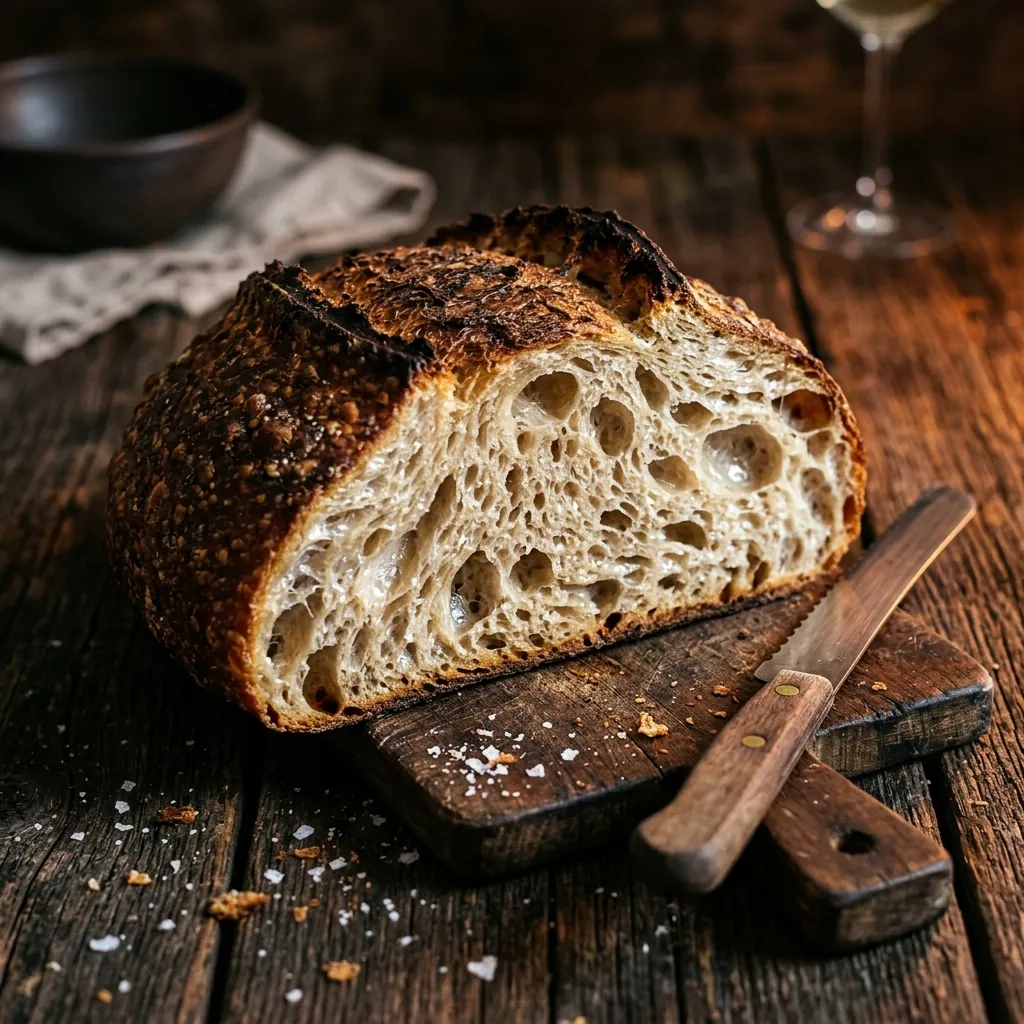
The Catalan 'Pan de Cristal' in my style: 85%+ hydration, extreme open crumb that is almost hollow, thin glassy crust that shatters, olive oil for fragrance. Incredibly light.

Useful terms *

  • * Bassinage: hold back part of the water (~10%) and work it into the ALREADY developed dough little by little, to reach high hydration without breaking the gluten network.
  • * Full development (incordare): knead until the dough is smooth, elastic and pulls away from the bowl (gluten fully developed).
  • * Final proof (appretto): the second proof after shaping, before baking.
Michele

Made with Michele's hands

MikiLab 🇮🇹🇩🇪