🇮🇹🇩🇪

MikiLab's recipes

Browse the recipes and make them at home: doses recalculated for the home oven, explained step by step.

MikiLab doesn't want to teach the craft to anyone who has practised it all their life. Hands, flour, the home oven and time always change something.

Sitor's Workshop

176 recipes
Other ways through the recipes

Recipes are of two kinds: those checked or tested by Michele and the drafts written by Sitor, Michele's AI avatar: an artificial intelligence based on Anthropic models. Each recipe clearly states which kind it is.

Free for personal use. Recipes and texts © MikiLab: reproducing or selling them is forbidden, links are welcome. Official prints and shares carry the MikiLab logo.

© MikiLab — Sitor's Manual · Made with Michele's hands

Other languages: use your browser's translator.

Radio

Sinfonia di Cereali

Enter doses, hydration and times. Hydration is computed automatically.

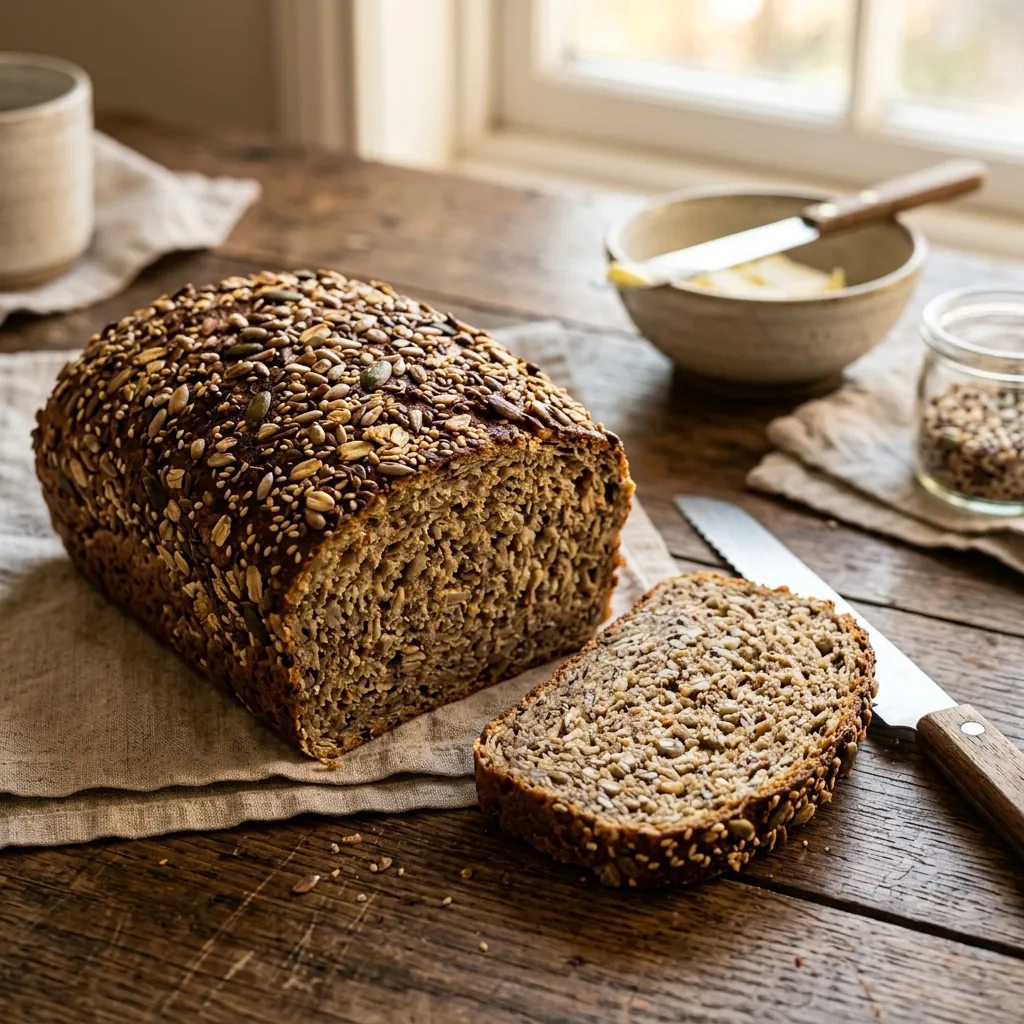
Symphony of GrainsIllustrative image
MikiLab
MikiLab
Symphony of Grains · 11/10/2026

🇩🇪Symphony of Grains

Five-Grain Bread

Recipe no. 42 · mikilab.de/42

Five-grain mix + Quellstück (soaked seeds)

Tested by Michele

Michele's touch: soaked breadcrumbs

In all my savoury recipes I add a little soaked breadcrumb, the «Brösel» (German bakers call it an old-bread soaker). It makes the crumb softer, brings crust flavour and keeps the bread fresh longer. Optional: the recipe works without it, but I always do it.

Dry breadcrumbs

50 g

Water

150 g

for this recipe, with 1000 g of flour

  1. The day before: stir the breadcrumbs and water into a soft paste. Cover and keep it in the fridge overnight.
  2. The next day: add all the paste to the final dough (not to the preferment), with the other ingredients. The recipe's water stays the same.

Use plain breadcrumbs, with no salt or seasoning. Best of all is your own bread from yesterday, dried and grated.

MikiLab
MikiLab
Sitor's Manual

Symphony of Grains

Mix 5 cereali + Quellstück (semi ammollati) · Proof: 40 min · Difficulty: Medium
Flour1000 g
Water760 g
Sourdough200 g
Salt20 g
Quellstück (5 soaked grains)400 g
Coconut fat10 g
Olive oil (Öl)10 g
Apple cider vinegar (Essig)10 g
Miglioratore Naturale Pro (2% on flour weight)20 g
Malt (Malz)10 g
Golden flaxseed (Gold)10 g
Gluten (Di.Glutin)20 g
Baker's yeast (Hefe)7 g

Baking: 225°C · 40 min

Method

🌙 THE NIGHT BEFORE — Quellstück (soaked seeds): weigh out the 5-grain/seed mix (sunflower, flax, sesame, oat, millet) and cover with an equal weight of lukewarm water (1:1 ratio). Cover and leave to rest overnight at room temperature: the seeds soften, they won't absorb water from the dough, and they give the crumb a soft, moist texture. THE NEXT DAY: 1) Pre-ferment: refresh the sourdough starter / poolish and let it mature until doubled. 2) Autolyse: mix flour and water, rest for 30 minutes. 3) Dough: incorporate the pre-ferment, then the dry ingredients (gluten, malt, golden flax, improver) and develop the gluten. 4) Add the drained Quellstück and seeds; then the coconut fat in one piece; lastly oil, vinegar and salt. 5) Bulk fermentation at room temperature (~24-26°C) with folds every 30-40'; use the fridge (4°C) only to manage timing. 6) Divide, shape (or form rolls), roll in seeds and place for final proof. 7) Baking: 225°C for 40 minutes (rolls ~18'), with steam for the first 10 minutes. 👉 Grain rolls using the SAME dough: pieces of ~90 g, rounded and rolled in seeds.

Allergens: Gluten, Sesame, Lupin

© MikiLab — Sitor's Manual · mikilab.de · Do not reproduce or sell without the logo and consent
Medium

Sourdough (Lievito Madre) check

  1. Put the starter in a straight clear glass jar, mark the level with a rubber band and note the time.
  2. Ready when doubled, with a domed top.
  3. Good signs: bubbles against the glass, smell of yogurt or sweet milk.
  4. Collapsed dome and sharp smell (vinegar, solvent) = «over-proofed»: refresh again before use.
  5. Discard: fuzzy mould, pink or orange streaks.
  6. Keep it around 28 °C (e.g. oven off with light on; check with a thermometer).
  7. Note how many hours it takes to double: if it gets faster each refresh, it's getting stronger.

Use it when it is active and stable: it doubles regularly after a refresh. If you have no starter, ask a bakery for a piece or use dried starter to reactivate (about a week).

On TikTokRecipe no. 42

What you need· draft

  • Scale (1 g)Where: houseware
  • Large bowlWhere: houseware
  • Oven thermometer · optionalWhere: houseware / online
  • Clear glass jar with rubber bandWhere: houseware store
  • Room thermometerWhere: houseware / online

Allergens

GlutenSesameLupin

Always check the labels of your products.

Oven and steam can burn.

Recipes and texts © MikiLab. Free for personal use. Official prints and shares carry the MikiLab logo.

The MikiLab label

SourdoughWholegrainSugar: noneNo eggsNo additives
How it rises
sourdough starter
Baker's yeast
0,7 % of flour
Salt
2 g per 100 g flour
Added fat
1 %
Flour
Mix 5 cereali + Quellstück (semi ammollati)

Michele's method: the preferment or sourdough works at least 12 hours. More flavour, longer keeping, less yeast.

Calculated from the recipe: facts about the method, not a nutrition label nor medical advice.

Process diagram

MikiLabSymphony of Grains🫙1. PrefermentPoolish🥣2. Mixing12 min🤲3. Shaping🔥4. Baking225 °C · 40 min🌬️5. Coolingmikilab.de
76% hydr.1000g flour225° · 40′ Fan with rackIndirect

Ingredients

Rescaleg
How much flour?
Flour1000 g · 100%
Water760 g · 76%
Preferment (Poolish)200 g · 20%
Salt20 g · 2%
Quellstück (5 soaked grains)400 g · 40%
Coconut fat10 g · 1%
Olive oil (Öl)10 g · 1%
Apple cider vinegar (Essig)10 g · 1%
Miglioratore Naturale Pro (2% on flour weight)20 g · 2%
Malt (Malz)10 g · 1%
Golden flaxseed (Gold)10 g · 1%
Gluten (Di.Glutin)20 g · 2%
Baker's yeast (Hefe)7 g · 0.7%

Procedure

🌙 THE NIGHT BEFORE — Quellstück (soaked seeds): weigh out the 5-grain/seed mix (sunflower, flax, sesame, oat, millet) and cover with an equal weight of lukewarm water (1:1 ratio). Cover and leave to rest overnight at room temperature: the seeds soften, they won't absorb water from the dough, and they give the crumb a soft, moist texture. THE NEXT DAY: 1) Pre-ferment: refresh the sourdough starter / poolish and let it mature until doubled. 2) Autolyse: mix flour and water, rest for 30 minutes. 3) Dough: incorporate the pre-ferment, then the dry ingredients (gluten, malt, golden flax, improver) and develop the gluten. 4) Add the drained Quellstück and seeds; then the coconut fat in one piece; lastly oil, vinegar and salt. 5) Bulk fermentation at room temperature (~24-26°C) with folds every 30-40'; use the fridge (4°C) only to manage timing. 6) Divide, shape (or form rolls), roll in seeds and place for final proof. 7) Baking: 225°C for 40 minutes (rolls ~18'), with steam for the first 10 minutes. 👉 Grain rolls using the SAME dough: pieces of ~90 g, rounded and rolled in seeds.

The why

This recipe's steps explained by Sitor (AI). The quantities stay Michele's.

Machine Sheet

Production Mode: Manual

Hourly Yield: ≈ 40-80 pcs/hour (by hand)

No machine active: manual work. Turn on the Machine Park in the Lab.

Multigrain bread with Quellstück: seeds soaked the night before give a soft crumb and extended shelf life. Extremely popular in Germany.

Useful terms *

  • * Autolyse: an initial rest of flour and water (20-40 min) before salt and yeast; it develops gluten and makes the dough more extensible.
  • * Poolish: a liquid preferment (equal parts flour and water + a little yeast), ripens 8-16 h; adds aroma and softness.
  • * Quellstück: seeds/grains soaked (often the night before) so they absorb water and don't steal moisture from the dough.
  • * Full development (incordare): knead until the dough is smooth, elastic and pulls away from the bowl (gluten fully developed).
  • * Final proof (appretto): the second proof after shaping, before baking.
Michele

Made with Michele's hands

MikiLab 🇮🇹🇩🇪