🇮🇹🇩🇪

MikiLab's recipes

Browse the recipes and make them at home: doses recalculated for the home oven, explained step by step.

MikiLab doesn't want to teach the craft to anyone who has practised it all their life. Hands, flour, the home oven and time always change something.

Sitor's Workshop

176 recipes
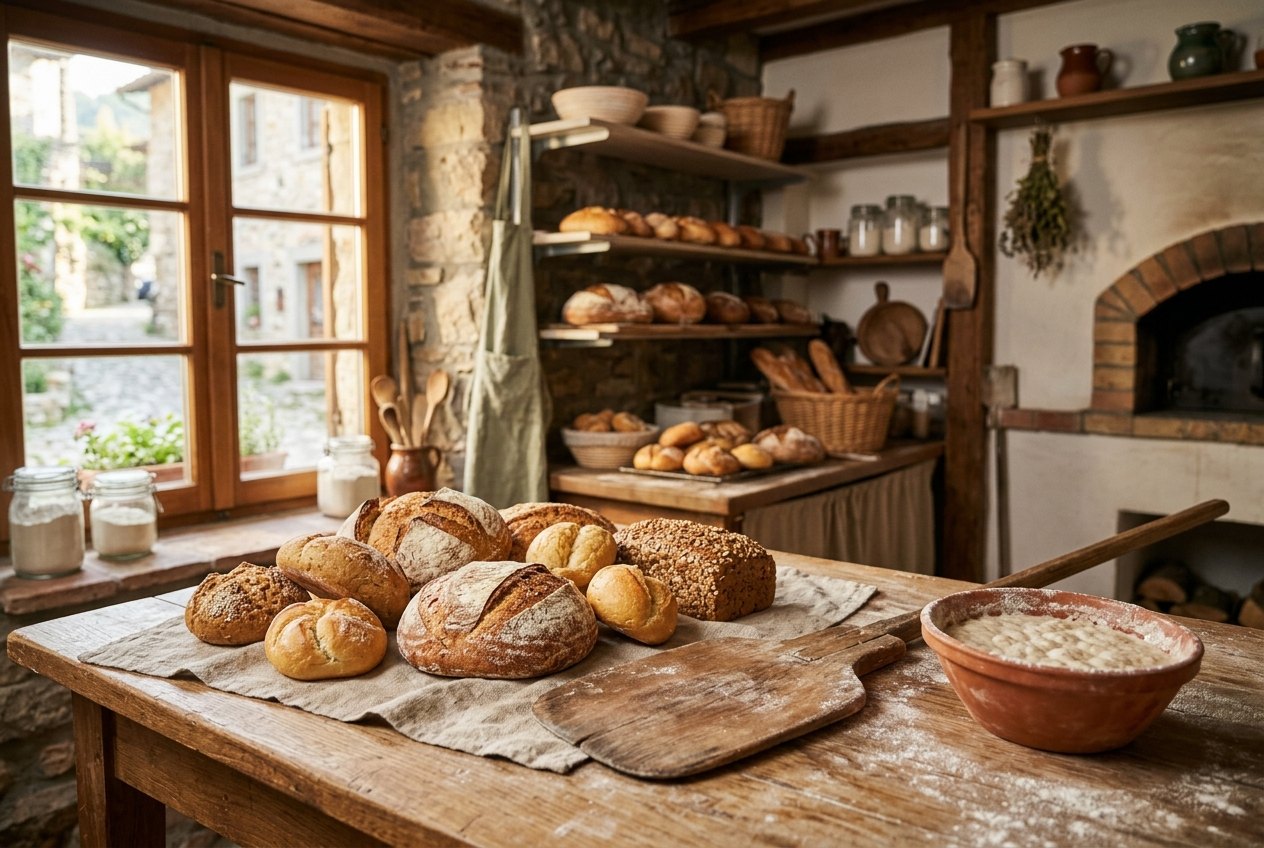
Other ways through the recipes

Recipes are of two kinds: those checked or tested by Michele and the drafts written by Sitor, Michele's AI avatar: an artificial intelligence based on Anthropic models. Each recipe clearly states which kind it is.

Free for personal use. Recipes and texts © MikiLab: reproducing or selling them is forbidden, links are welcome. Official prints and shares carry the MikiLab logo.

© MikiLab — Sitor's Manual · Made with Michele's hands

Other languages: use your browser's translator.

Radio

World Bread Day · 16 October 2026

Today MikiLab lights up.

Michele's free recipe book opens its doors to everyone. You make the first cut.

Sitor is an artificial intelligence, not a person. Nothing from this party is saved or sent.

Pan di Spagna

Enter doses, hydration and times. Hydration is computed automatically.

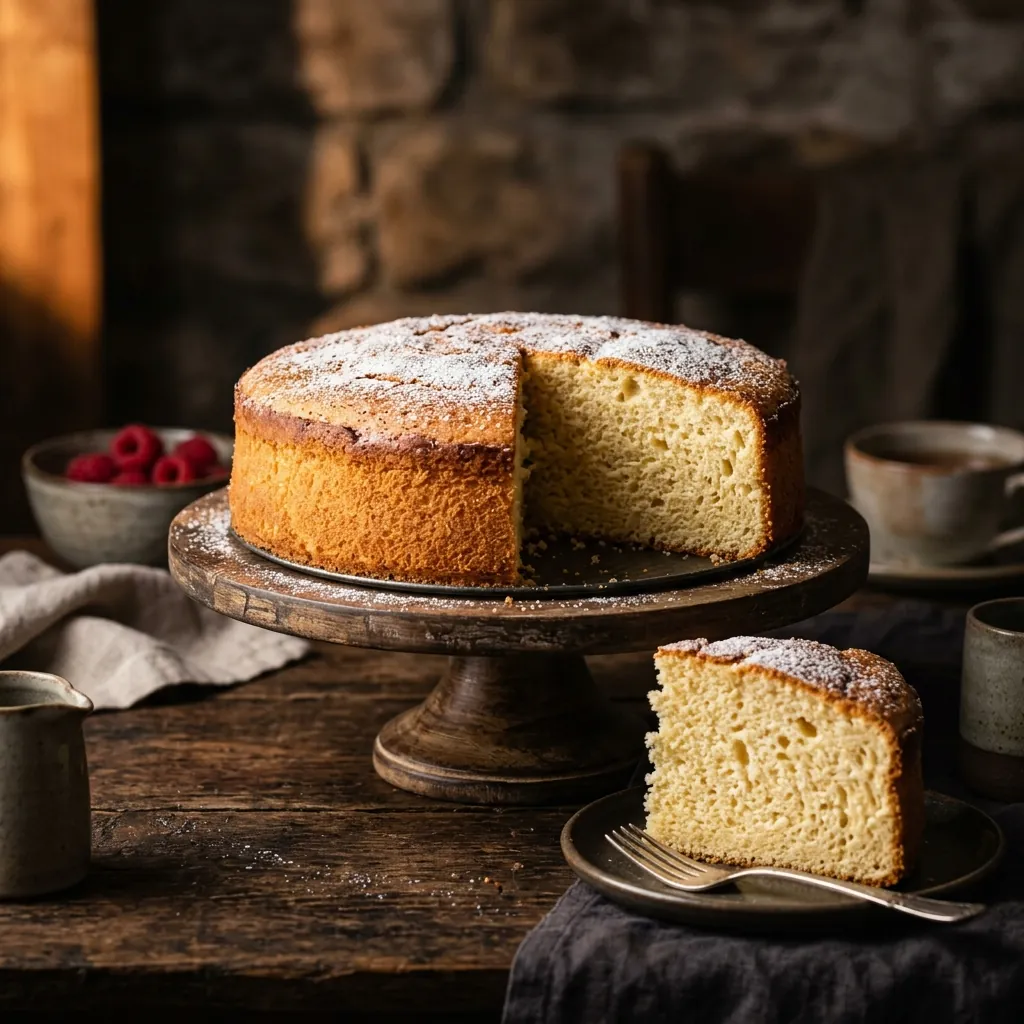
Sponge Cake (Pan di Spagna)Illustrative image
MikiLab
MikiLab
Sponge Cake (Pan di Spagna) · 16/10/2026

🇮🇹Sponge Cake (Pan di Spagna)

Recipe no. 159 · mikilab.de/159

Weak 00 flour (W150-180), sifted

Sitor draft

MikiLab
MikiLab
Sitor's Manual

Sponge Cake (Pan di Spagna)

Farina 00 debole (W150-180), setacciata · Proof: 30 min · Difficulty: Medium
Flour300 g
Salt2 g
Whole eggs (about 10 medium, room temperature)500 g
Caster sugar300 g
Grated lemon zest5 g
Vanilla (extract)3 g

Baking: 175°C · 30 min

Method

1) Butter and flour two 24 cm tins (or one 32 cm) and line the base with baking paper. Heat a static oven to 175 °C. Sift the flour twice. 2) Put the eggs (500 g) with the sugar (300 g), salt, vanilla and zest in a bowl over a pot of barely simmering water (bain-marie) and warm, stirring, to 40-45 °C. 3) Take off the heat and whip with an electric whisk on high 10-15 minutes until pale, voluminous, tripled and at ribbon stage: when you lift the whisk the mixture falls back leaving a trail that stays for 5 seconds. 4) Fold in the sifted flour in 3 additions with a spatula, by hand, from the bottom up with wide gentle movements so the foam doesn't deflate. Stop as soon as no flour is visible. 5) Pour immediately into the tins (fill two thirds) and bake at 175 °C for about 30 minutes, without opening the oven for the first 20 minutes. Done when golden, springy to the touch and a skewer comes out clean. 6) Take out, tap the tin lightly on the counter, turn out onto a rack and cool completely before cutting or soaking.

Allergens: Gluten, Eggs

© MikiLab — Sitor's Manual · mikilab.de · Do not reproduce or sell without the logo and consent
Medium

On TikTokRecipe no. 159

What you need· draft

  • Scale (1 g)Where: houseware
  • Large bowlWhere: houseware
  • Oven thermometer · optionalWhere: houseware / online

Allergens

GlutenEggs

Always check the labels of your products.

Oven and steam can burn.

Recipes and texts © MikiLab. Free for personal use. Official prints and shares carry the MikiLab logo.

The MikiLab label

Added fat: noneNo additives
How it rises
direct dough
Salt
0,7 g per 100 g flour
Added sugars
100 %
Flour
Farina 00 debole (W150-180), setacciata

Calculated from the recipe: facts about the method, not a nutrition label nor medical advice.

Process diagram

MikiLabSponge Cake (Pan di Spagna)🥣1. Mixing20 min🤲2. Shaping🔥3. Baking175 °C · 30 min🌬️4. Coolingmikilab.de
Direct dough300g flour175° · 30′ StaticDirect

Ingredients

Rescaleg
How much flour?
Flour300 g · 100%
Salt2 g · 0.7%
Whole eggs (about 10 medium, room temperature)500 g · 166.7%
Caster sugar300 g · 100%
Grated lemon zest5 g · 1.5%
Vanilla (extract)3 g · 1%

Procedure

1) Butter and flour two 24 cm tins (or one 32 cm) and line the base with baking paper. Heat a static oven to 175 °C. Sift the flour twice. 2) Put the eggs (500 g) with the sugar (300 g), salt, vanilla and zest in a bowl over a pot of barely simmering water (bain-marie) and warm, stirring, to 40-45 °C. 3) Take off the heat and whip with an electric whisk on high 10-15 minutes until pale, voluminous, tripled and at ribbon stage: when you lift the whisk the mixture falls back leaving a trail that stays for 5 seconds. 4) Fold in the sifted flour in 3 additions with a spatula, by hand, from the bottom up with wide gentle movements so the foam doesn't deflate. Stop as soon as no flour is visible. 5) Pour immediately into the tins (fill two thirds) and bake at 175 °C for about 30 minutes, without opening the oven for the first 20 minutes. Done when golden, springy to the touch and a skewer comes out clean. 6) Take out, tap the tin lightly on the counter, turn out onto a rack and cool completely before cutting or soaking.

The why

This recipe's steps explained by Sitor (AI). The quantities stay Michele's.

Machine Sheet

Production Mode: Manual

Hourly Yield: ≈ 40-80 pcs/hour (by hand)

No machine active: manual work. Turn on the Machine Park in the Lab.

The soft base of pastry-making: just eggs, sugar and flour, whipped for a long time. No baking powder needed if well whipped. Ratio eggs : sugar : flour = 5 : 3 : 3. For a more tender version replace 60 g flour with cornstarch. Keeps 2 days well wrapped; freezes very well. Recipe completed by Sitor (AI): a starting point to try.

Michele

Made with Michele's hands

MikiLab 🇮🇹🇩🇪